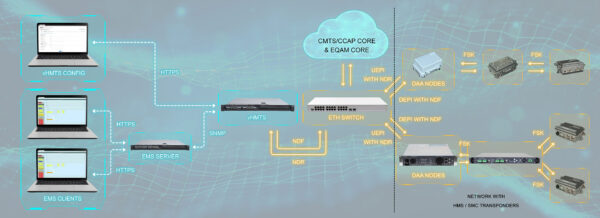

COMTECH’s latest development enables cost-effective DAA network deployment while preserving a significant part of the existing HFC infrastructure. The hybrid architecture combines DAA and FTTB technology, allowing the existing coaxial networks inside apartment buildings to remain in use while replacing conventional building amplifiers with FTTB nodes. This enables operators to deliver advanced DOCSIS 3.1 services without the need for extensive network reconstruction.
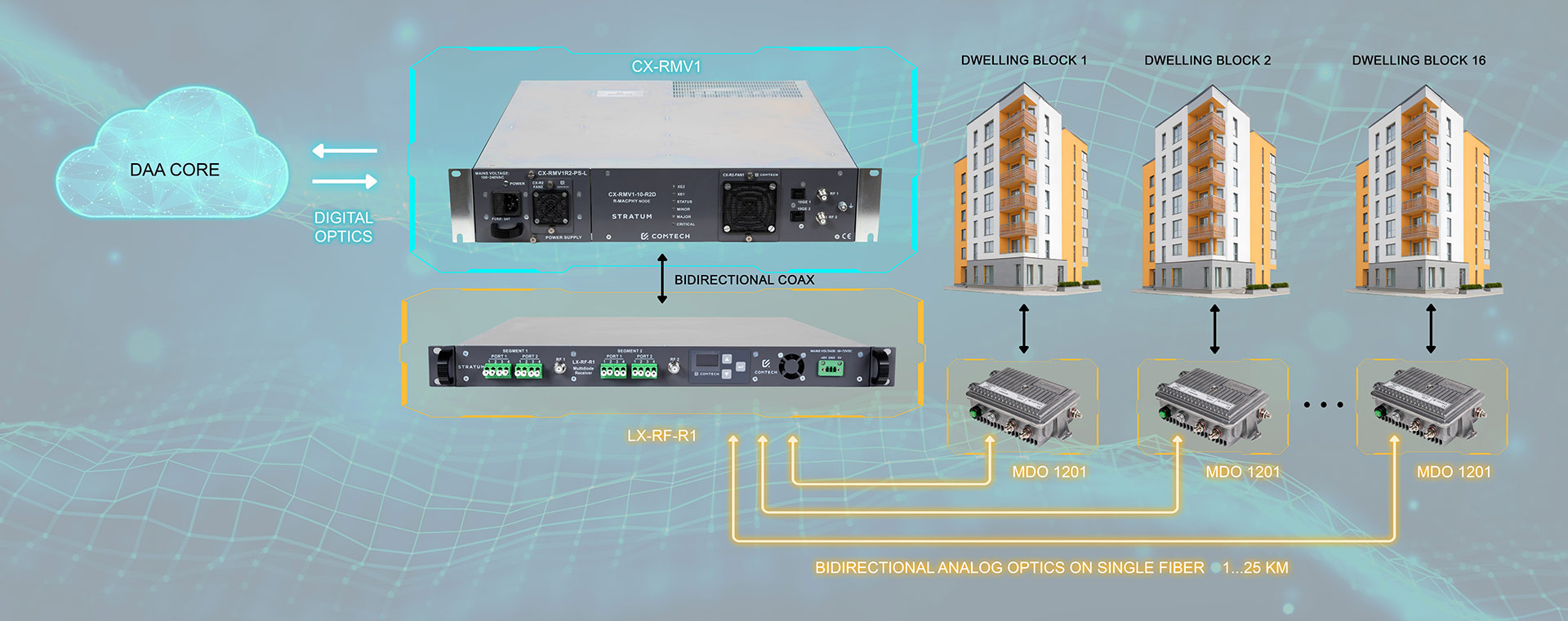
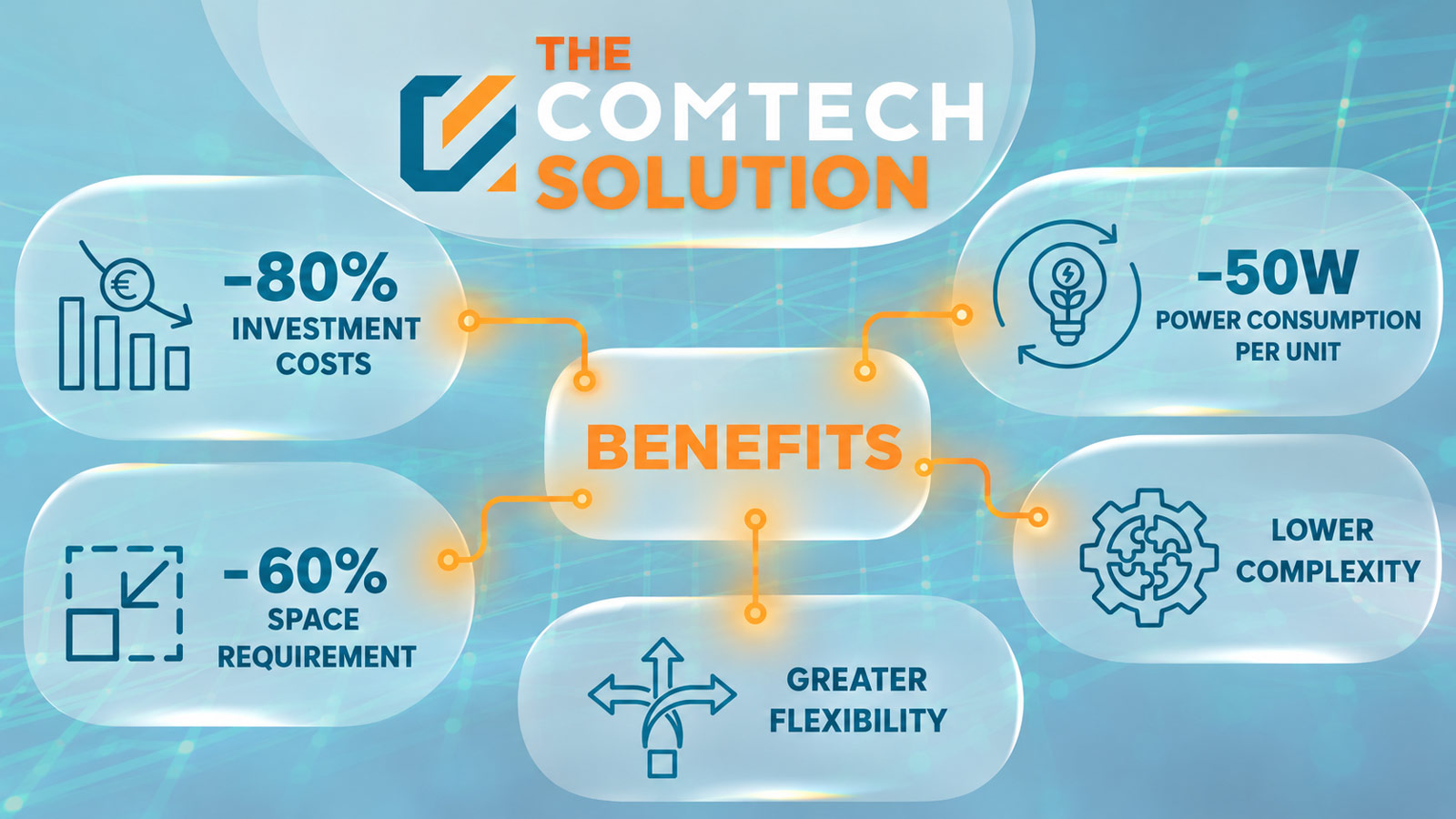
COMTECH measurements have demonstrated that a properly designed analogue optical network can provide the required signal quality over 5–15 km optical sections. Multiple FTTB nodes can be connected to a single DAA device, providing flexible scalability according to local network conditions. With a 16-way optical split, the hybrid architecture can reduce the acquisition cost of active network elements by more than 80% compared with deploying individual DAA devices in each building, while maintaining the same customer experience. Additional benefits include lower power consumption and the possibility of reusing the FTTB optical infrastructure as the basis of a future PON network.
As part of the development, COMTECH created the Stratum CoreX RMV1 and Stratum LineX RF-R1 solutions in response to the specific requirements of a Scandinavian operator. The rack-mounted RMV1, powered by -48 V DC, provides a compact and energy-efficient platform for a Vecima RMD, while the RF-R1 can distribute DOCSIS signals over a single-fiber analogue optical network to up to 16 sites.
COMTECH’s modular, building-block approach allows DAA networks to be tailored to the operator’s existing infrastructure and technical requirements, including Remote-PHY and Remote-MACPHY systems based on Vecima, Harmonic, Aurora or Sumavision platforms.
A detailed technical article on the subject was published in the August 2026 issue of Cable!Vision.
Cable!Vision is a professional journal for the cable, fiber-optic and IPTV community, now in its 21st year of publication. Its pages feature leading manufacturers, research and development companies, and service providers presenting their latest technical solutions and case studies, complemented by articles covering the industry’s business and regulatory trends.
The full article is available as a PDF at the following link: